You Are Not the Problem: When Work Is Asking Too Much of You
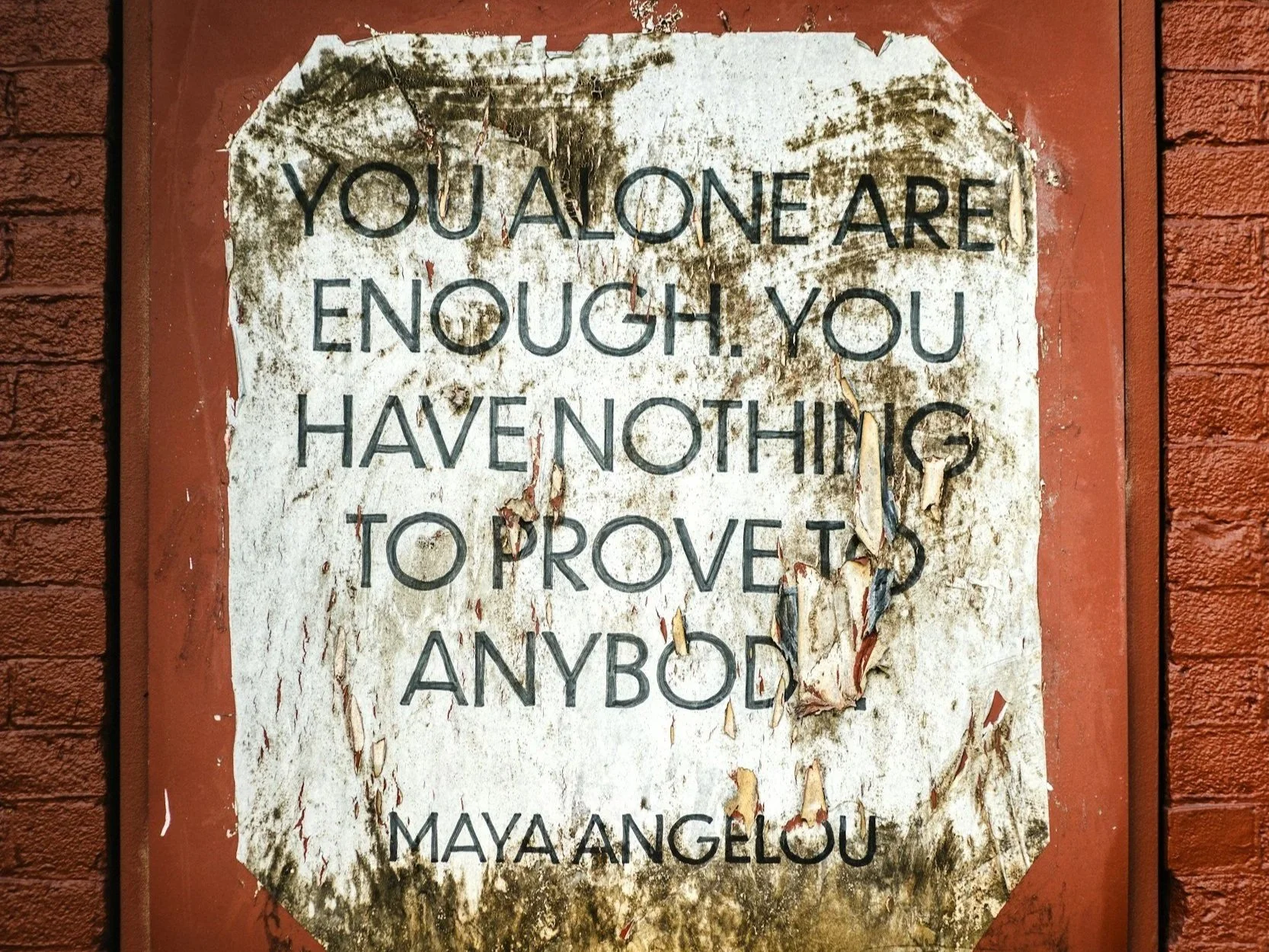
Photo by Jason Leung on Unsplash
There is a message many of us have absorbed about work:
If you are tired, overwhelmed, anxious, disengaged, or unhappy, the problem must be you.
You need to be more resilient. More organized. Less sensitive. More grateful. Better at boundaries. Better at managing stress. Better at “not taking things personally.”
And listen—self-awareness matters. Boundaries matter. Learning how to communicate, manage time, and advocate for yourself can be valuable.
But sometimes the problem is not that you need to become more flexible.
Sometimes the environment is asking too much of you.
The workplace may reward overwork, dismiss your contributions, normalize bias, demand constant availability, or expect you to perform emotional labor that is never named in the job description.
When that happens, your exhaustion is not a moral failure.
It may be a signal.
Work affects how we see ourselves
Bell hooks wrote about the connection between work and self-love: many people are not taught that their work can have a significant effect on their capacity to be self-loving. When work occupies so much of our time, work we hate can assault our self-esteem and self-confidence.
That observation is deeply practical.
Work is not only how many of us make money. It can affect our routines, relationships, health, housing, insurance, identity, and sense of possibility. It can influence how we talk to ourselves when we wake up, how we carry ourselves through the day, and how much energy remains for the people and parts of life we care about.
So when a job consistently makes you feel small, unsafe, invisible, overextended, or like you need to prove your worth every day, it makes sense that your self-worth may take a hit.
That does not mean your worth actually changed.
It means you have been in a context that may be teaching you to question it.
What does “the system” mean?
When I say “the system,” I do not mean one mysterious villain in a swivel chair somewhere.
I mean the policies, practices, norms, power dynamics, and unspoken expectations that shape how work happens.
That can include:
Workplaces that reward people for being constantly available.
Managers who confuse urgency with leadership.
Cultures that celebrate burnout as commitment.
Pay gaps and promotion barriers.
Bias, microaggressions, discrimination, and code-switching demands.
Invisible emotional labor, especially for people from marginalized identities.
The expectation that employees should be grateful for basic dignity, flexibility, or respect.
For Black professionals and other marginalized workers, this can include the extra, exhausting work of monitoring how you are perceived, deciding when it is safe to speak up, and carrying the emotional impact of being underestimated or misunderstood.
That is work. Even when no one calls it that.
Your body may be responding accurately
Sometimes we interpret our body’s responses as evidence that we are not capable enough.
But your body may be noticing that a situation is not sustainable.
Maybe you feel anxious before a meeting with a particular leader. Maybe you rehearse messages repeatedly because the consequences of being misunderstood feel too high. Maybe you feel tension in your shoulders every morning. Maybe you are exhausted after a day of constant code-switching and emotional regulation.
Those experiences are not always “just stress.”
They may be your body responding to pressure, uncertainty, harm, or lack of safety.
You do not need to pathologize yourself for adapting to an environment that is difficult to navigate.
Instead, try curiosity:
What am I carrying at work that is not visible in my job description?
What am I doing to make other people comfortable?
When do I feel most like myself at work?
When do I feel like I have to shrink, perform, or protect myself?
What support, boundary, or change would make this feel more sustainable?
These questions do not solve structural problems overnight. They do help you separate what is yours to address from what is not yours to internalize.
Naming the system creates options
When we believe we are the entire problem, we often respond by trying harder.
We over-function.
We take on more than our share.
We stay silent to avoid being seen as difficult.
We remain in roles that are harming us because we think leaving would mean we failed.
Naming the system creates another possibility.
It lets you say:
“This is not working, and that does not mean I am the problem.”
From there, you can make more grounded decisions.
Maybe you set a boundary. Maybe you document what is happening. Maybe you seek mentorship, therapy, community, or coaching. Maybe you explore an internal transfer. Maybe you update your résumé, start building your savings, or make a transition plan.
And sometimes, you leave.
Not because you are weak.
Because you are listening.
Agency without self-blame
Naming structural harm does not mean you have no power.
It means you stop spending all your energy trying to solve what was never yours alone to solve.
You can take responsibility for your next step without taking responsibility for the conditions that made the step necessary.
That distinction matters.
You are allowed to want work that supports your health, dignity, relationships, and future.
You are allowed to be ambitious without being endlessly available.
You are allowed to want money, meaning, rest, safety, and joy in the same career.
And you are allowed to believe that your humanity is not something you need to earn at work.
Keep listening
If you are wondering, “Is it really that bad, or am I being dramatic?” I want you to know that question often appears when we have been taught to doubt ourselves.
Start small.
Name one thing that feels heavy.Name one thing you are carrying that is not visible.Name one thing you need more of.
You do not need to have a perfect plan before you honor what is true.
For a deeper conversation about rest, self-worth, code-switching, and leaving a job that no longer fits, listen to my conversation with Tiffany LeNoir on Highly Visible & A Little Misunderstood.
If you are ready to reflect on what is within your control, what support you need, and what might come next, download the free Career Joy Roadmap.